

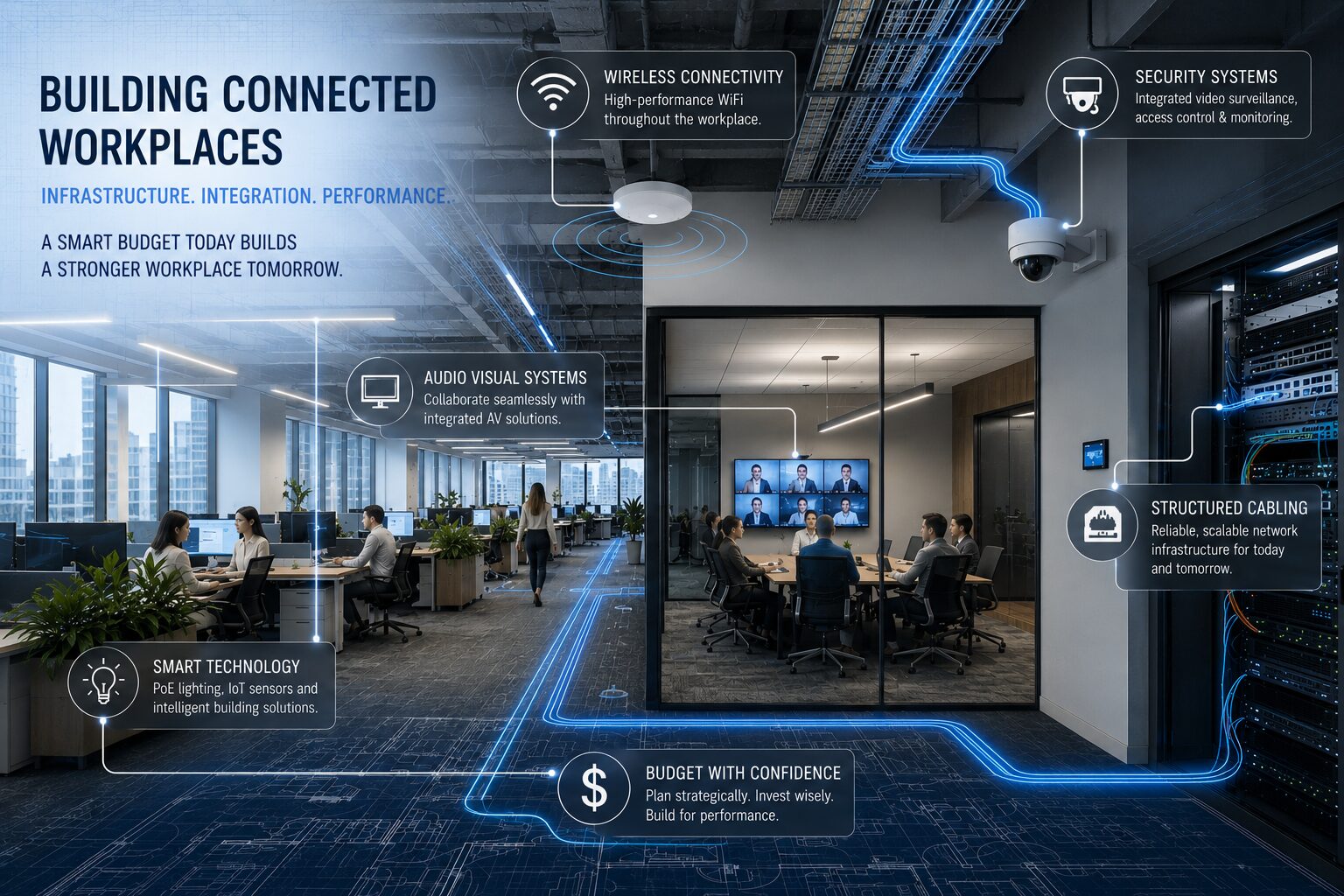
When planning a new office, renovation, or tenant fit-out, one of the most overlooked, but critical, components is technology infrastructure budgeting. From cabling and AV systems to security and wireless connectivity, having a clear cost framework early on helps avoid surprises and ensures your space is built for performance from day one.
Below is a breakdown of key technology categories and what you can expect to budget for each.
1. Data Cabling: The Foundation of Your Network
In many commercial office projects, structured cabling becomes one of the most underestimated line items because infrastructure requirements evolve significantly between schematic design and occupancy. Whether your environment is wired, wireless, or hybrid, proper infrastructure is essential.
Typical Budget:
- $4–6 per square foot (standard Category 6)
- $6–8 per square foot (Category 6A / 10 Gig systems)
Key Assumptions:
- Two data drops per workstation
- Drop ceilings (no cable tray systems)
- Wireless access point cabling throughout
- One IT room with 1–2 racks
Key Planning Questions:
- Is IT managed internally or by an MSP?
- Will the workplace lean more wired or wireless?
What Impacts Structured Cabling Costs?
- Ceiling environment – open ceiling, drop ceiling, closed sheetrock ceiling
- Active office vs unoccupied or new construction
- Distance from endpoints/workstations to MDF/IDF rooms
- Union labor requirements
2. Audio Visual (AV): Collaboration Comes at a Cost
AV systems vary widely depending on room size, use case, and level of integration. Standardizing your approach can help control costs.
Typical Budgets by Room Type:
Divisible / Large Conference Rooms:
- $125,000 – $225,000
Includes multiple displays, PTZ cameras, control systems, integrated audio, and conferencing platforms.
Executive Boardrooms:
- $40,000 – $75,000
Huddle Rooms:
- $12,000 – $19,000 per room
Executive Offices:
- $4,000 – $6,000
Room Scheduling Panels:
- $1,500 – $2,000 per unit
Sound Masking:
- $3-5 per square foot
Key Planning Questions:
- Do you have an AV standard?
- What video conferencing platform will you use?
- How do you want content shared from participants in the conference room?
What Impacts AV System Costs?
- Room size and acoustics
- Furniture and architectural coordination and readiness
- Video conference platform standardization
- Level of automation and control
3. Security System: Protecting People and Assets
Security is no longer optional, it’s a core requirement of any workplace environment.
Typical Budget:
- $1.50 – $4.00 per square foot
Common Inclusions:
- Access control (card readers)
- Surveillance cameras
- Coverage for entry points and IT rooms
- Intercom systems for entries
- Alarm systems and panic buttons
Key Planning Questions:
- Do you require card access for all doors or just key areas?
- Will video intercom systems or additional surveillance be needed?
- Will you need a system that handles unauthorized entries or emergency situations?
What Impacts AV System Costs?
- Number of controlled doors
- Camera quantity and video retention requirements
- Multiple system integration requirements
4. Emerging Technology Considerations
Modern workplaces are evolving rapidly, and budgeting should account for newer technologies that improve efficiency and user experience.
Trending Investments:
- Smart PoE lighting systems
- Cloud-based video conferencing
- Cellular signal boosters
- Advanced wireless design
- IoT sensors and integrated networks
- Sound masking solutions
These technologies often blur the lines between traditional systems, making early coordination between IT, facilities, and design teams essential.
5. Why Early Coordination Matters
Budgeting isn’t just about numbers, it’s about alignment. Successful projects depend on clear collaboration between:
- IT teams
- Facilities
- Architects and engineers
- Technology integrators
Early input ensures:
- Accurate budgeting
- Fewer change orders
- Better system performance
- Seamless integration across all technologies
Final Thoughts
When technology infrastructure is under-budgeted early in a project, the result is usually change orders, delayed occupancy, or systems that don’t fully support how employees actually work. With clear budgeting benchmarks and the right questions upfront, you can create a space that is scalable, efficient, and ready for the future.
At the end of the day, it’s not about buying systems, it’s about building solutions that work together.
About Telecom Infrastructure Corp
As a family run company with over 40 years in business, our focus is on providing our clients with consulting and construction services that allow them to breathe easy and focus on their day-to-day tasks.
Telecom specializes in designing, installing and managing complex structured cabling, AV, security, sound masking, cellular and PoE lighting projects and has the expertise to assist in your upcoming project. For any questions please Contact Us or email us at info@telecom-wiring.com
 Wired networking is quickly becoming the dial up internet of the current decade as wireless technology is advancing at an incredibly rapid pace. Is going wireless in the best interest of your business? Download our FREE book right now entitled "Cutting the Cords: Making a Case for Wireless Communications" and find out!